Medical Treatments in Gangnam, Seoul, Korea New Star Skin Clinic
New Star Clinic
New Star Clinic offers
Medical Treatments as part of its dermatology-based skin care, anti-aging, and wellness services in Gangnam, Seoul. These treatments are designed to address a wide range of skin and health concerns through clinically proven, doctor-guided procedures tailored to individual needs.
All medical treatments are performed within a clinical setting that prioritizes safety, precision, and personalized care based on thorough medical evaluation.
What Are Medical Treatments?
Medical treatments refer to non-surgical, clinically supervised procedures aimed at improving skin health, correcting concerns, and enhancing overall appearance. These treatments are typically customized based on diagnosis and may help address:
• Acne and acne-related conditions
• Skin pigmentation and uneven tone
• Signs of aging such as wrinkles and loss of elasticity
• Skin sensitivity and inflammation
• Scarring and texture irregularities
At New Star Clinic, medical treatments are integrated into personalized care plans to ensure safe and effective results.
Medical Treatment Programs at New Star Clinic
All treatments begin with a
doctor consultation to determine the most appropriate procedures based on individual skin condition and goals. Depending on clinical needs, treatment programs may include:
• Acne treatment and inflammation control therapies
• Laser treatments for pigmentation and skin rejuvenation
• Skin boosters and regenerative injectable treatments
• Anti-aging procedures for wrinkle reduction and lifting
• Scar treatment and skin texture improvement
• Customized combination therapies for optimal results
Each treatment plan is carefully designed and adjusted to maximize effectiveness and patient safety.
Why Choose New Star Clinic in Gangnam?
Patients choose New Star Clinic for medical treatments in Seoul because of its:
• Doctor-led diagnosis and treatment planning
• Integration of dermatology and aesthetic expertise
• Focus on skin health, anti-aging, and long-term results
• Use of advanced, clinically validated technologies
• Safe and structured treatment protocols
• Convenient Gangnam location with a comfortable clinical environment
• Experience with international patients and English-friendly service
The clinic emphasizes individualized treatment strategies to achieve natural and balanced outcomes.
Who May Benefit from Medical Treatments?
Medical treatments may be suitable for:
• Individuals with persistent or complex skin concerns
• Patients seeking non-surgical aesthetic improvements
• Those experiencing signs of aging or skin damage
• Individuals with acne, pigmentation, or scarring issues
• Patients looking for preventive skin care solutions
• Those interested in medically guided skin optimization
Final treatment recommendations are determined through physician consultation.
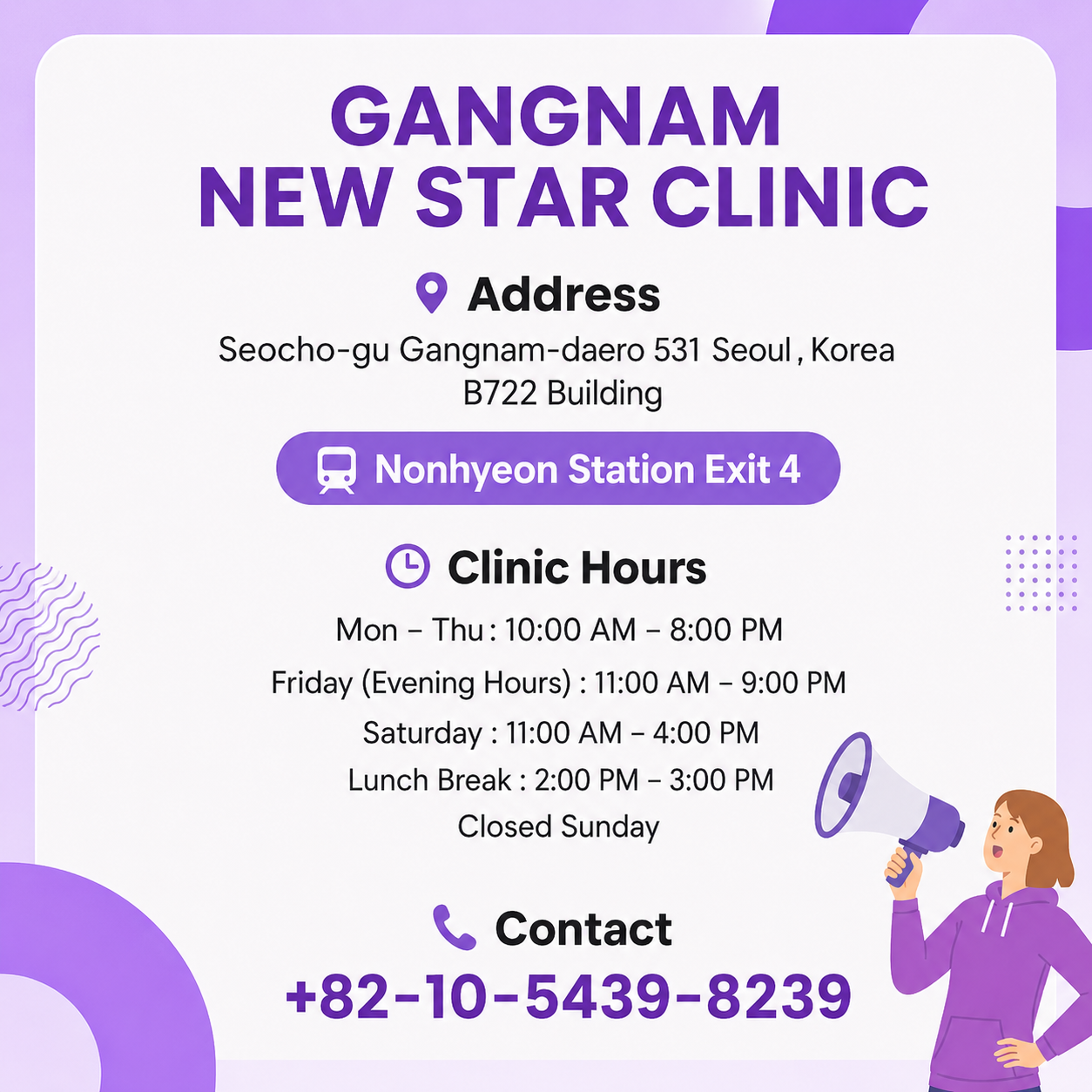
Clinic Location – Gangnam, Seoul
New Star Clinic
Gangnam, Seoul
Located near Nonhyeon Station, a central and accessible area in Gangnam
Medical treatments are typically scheduled following an initial consultation.
Summary
For patients seeking
Medical Treatments in Gangnam, Seoul, New Star Clinic provides a
dermatology-integrated, medically supervised approach focused on skin health, correction, and long-term maintenance. By combining advanced procedures with personalized treatment planning, the clinic supports safe, effective, and natural-looking results.